Hello, my dear global friends! It’s your local Seoul buddy and expert, K-locallog. Are you excited about your upcoming trip to the Land of the Morning Calm?
One of the most frequent questions I get from travelers planning their travel to South Korea 2026 is: “How much will I spend on transportation?” While our subways and buses are legendary, there are times—like when you’re carrying heavy luggage or exploring late at night—when a taxi is simply the best choice.
However, understanding the Korea Taxi Fare system is vital to ensure you don’t overspend or fall for common tourist traps. In this comprehensive 2026 guide, I will break down the costs for major cities and share my “secret local weapons” to help you save every won!
1. The Foundation: Connect First to Save Later
The very first step to mastering the Korea Taxi Fare is getting your smartphone ready. Why? Because being able to check real-time fares and routes is your best defense against overcharging.
As soon as you land at Incheon Airport, don’t rush to the taxi stand. First, ensure you have a secure internet connection. I’ve prepared a guide specifically for this, focusing on speed and security. 👉 Ultimate Guide: Best South Korea SIM Cards for Tourists in 2026
2. 2026 Korea Taxi Fare: The Ultimate Comparison Table
Prices can vary slightly depending on the city you are in. Here is the most up-to-date data for 2026. Bookmark this table to use as a quick reference during your travel to South Korea 2026.
| City (Status 2026) | Standard Taxi Base Fare | Deluxe (Mobeom) Base Fare | Distance / Time Increments |
| Seoul (The Capital) | 4,800 KRW | 7,000 KRW | 100 KRW per 131m / 30s |
| Busan (The Port City) | 4,800 KRW | 7,500 KRW | Standard metropolitan rates |
| Jeju (The Paradise) | 4,300 KRW | 6,000 KRW | Slightly more affordable |
Note: The base fare typically covers the first 1.6km (about 1 mile). After that, the meter increases based on distance and time.
3. Decoding the Night Surcharge (The 22:00 Magic)
Many travelers are shocked when their Korea Taxi Fare suddenly jumps late at night. In 2026, the night surcharge system has become more detailed, especially in Seoul. It isn’t a scam; it’s a regulated policy to ensure drivers stay on the road during busy hours.
- 22:00 to 23:00 & 02:00 to 04:00: A 20% surcharge applies.
- 23:00 to 02:00 (The Peak): A 40% surcharge applies!
- During these peak hours, the base Korea Taxi Fare in Seoul can start at approximately 6,700 KRW. Don’t be alarmed; this is the standard rate.
This is perhaps the most important tip I can give you as a local. While Google Maps is great, it often misses the nuances of local services. In Korea, we are “Review Fanatics.”
[Local’s Pro Tip] If you are booking a private taxi tour or a long-distance transfer, you MUST check Naver Reviews. Korean locals are incredibly honest (and sometimes very strict) in their feedback. Use a browser translator to read the Naver comments. If a driver takes a long route or is unfriendly, you will see it there immediately. Checking both the good and bad reviews on Naver is the ultimate ‘Son-pum’ (manual effort) that guarantees a perfect Korea Taxi Fare experience.
For a deeper dive into common scams and how to stay safe, don’t forget to read my specialized guide: 👉 Expert Guide: How to Avoid Every Taxi Scam in Korea
5. Master the ‘Son-pum’: Predicting Your Fare
In Korea, we value ‘Son-pum’ (손품)—the effort of searching with your own hands. Before you step into a taxi, open the Naver Maps or KakaoMap app. Enter your destination, and it will provide an estimated Korea Taxi Fare.
This estimation is usually 95% accurate. When you get in, you can politely show the driver the estimated fare on your phone. This subtly tells the driver: “I am a smart traveler who knows the Korea Taxi Fare.” It creates a layer of respect and prevents any “creative” route choices.
6. Smart Apps for a Fair Ride
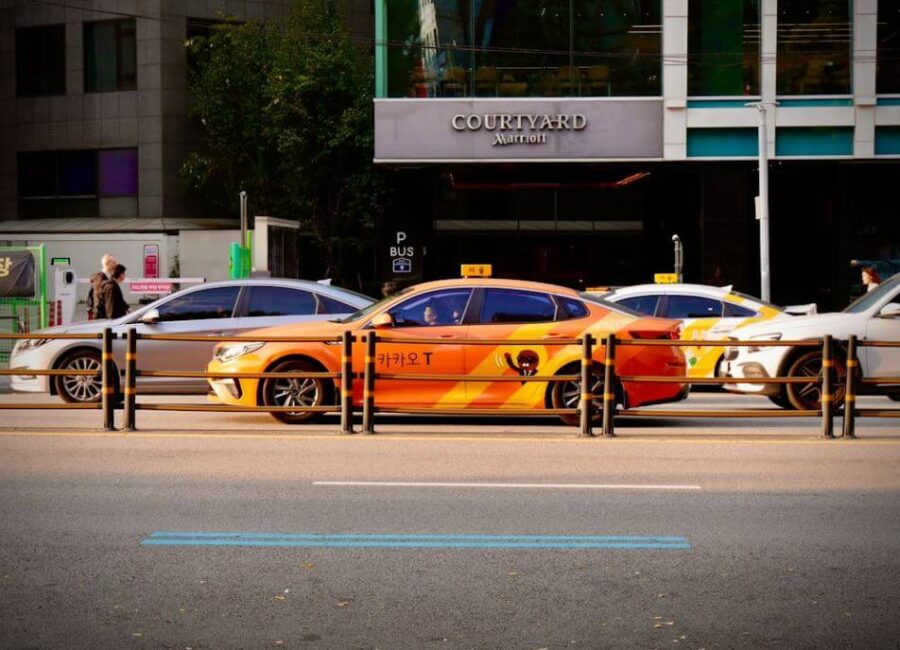
The best way to ensure you pay the correct Korea Taxi Fare is to use ride-hailing apps. They record the journey digitally, and the fare is calculated by the app’s GPS or the connected meter.
- k.ride: Specially designed for foreigners. It supports foreign credit cards and offers a “fixed price” option for certain routes.
- Kakao T: The absolute giant in Korea. Safe, fast, and uses the official meter.
7. Your Safety Net: The 1330 Helpline
Even with the best preparation, issues can happen. If you feel you’ve been charged an unfair Korea Taxi Fare, or if you leave your bag in the car, call 1330.
This is the official 24/7 tourist helpline managed by the government. They provide free interpretation services and can help you resolve disputes with drivers on the spot. 👉 Official VisitKorea Website: More Safety Tips
Frequently Asked Questions (FAQ)
Q: Can I pay my Korea Taxi Fare with a credit card in small towns? A: Yes! South Korea is incredibly advanced in digital payments. Every single taxi, even in the smallest villages, is equipped with a card terminal.
Q: Are there extra fees for heavy luggage? A: For standard suitcases, there is no extra Korea Taxi Fare. However, if your luggage is so large that it requires a Jumbo Taxi (Large Van), the base fare will be higher (usually starting at 7,000 KRW).
Q: What should I do if the driver doesn’t turn on the meter? A: It is illegal for a taxi driver not to use the meter. If they try to “negotiate” a price, politely ask them to “Meter, please” (Meter-gi kyeo-ju-se-yo). If they refuse, it’s best to get out and find another car.
Final Thoughts from K-locallog
My dear friends, your travel to South Korea 2026 should be filled with breathtaking views and delicious food, not worries about transportation costs. By understanding the Korea Taxi Fare and putting in a little “Son-pum” to check Naver reviews, you are taking control of your journey.
Remember, most Korean drivers are honest and hardworking people who take pride in their service. Stay informed, stay smart, and enjoy the ride!
With warmth and sincerity, K-locallog